Showing posts with label Sonny Stitt. Show all posts

Monday, November 9, 2026

Don Patterson with Sonny Stitt & Booker Ervin • Patterson's People


Biograph:
Inspired to switch from piano to organ by Jimmy Smith, Don Patterson was one of the Hammond B-3's most bop-rooted players, able to play bluesy soul-jazz grooves or break out of the pocket for some nimble, sharply defined solo lines. Though he led numerous recording dates for Prestige and later Muse, he was best-known as Sonny Stitt's favorite organist, proving eminently compatible with the Parker-influenced saxophonist. Patterson was born in Columbus, OH, on July 22, 1936, and began studying piano as a child. His first major influence was Erroll Garner, and some of that flavor remained in his playing even after he heard Jimmy Smith in 1956 and changed instruments. Patterson made his professional debut on the organ in 1959, and played with a number of groups before Stitt discovered him. The association helped make Patterson's name, and he began recording for Prestige in 1964, often with a trio featuring guitarist Pat Martino and drummer Billy James. Patterson also played with numerous other soul-jazz sax greats over the course of the '60s, before settling in Gary, IN, toward the end of the decade. Drug addiction curtailed his recording activities somewhat, as only a few sporadic sessions for Muse appeared during the '70s. He did revive his career somewhat after moving to Philadelphia, but his health worsened, forcing him to take dialysis frequently; he died on February 10, 1988.

///////

Biografía:
Inspirado por Jimmy Smith para pasar del piano al órgano, Don Patterson fue uno de los intérpretes más arraigados del Hammond B-3, capaz de tocar ritmos de soul-jazz o de salir del bolsillo para obtener líneas solistas ágiles y bien definidas. Aunque dirigió numerosas grabaciones para Prestige y más tarde para Muse, era más conocido como el organista favorito de Sonny Stitt, demostrando ser eminentemente compatible con el saxofonista influenciado por Parker. Patterson nació en Columbus, OH, el 22 de julio de 1936, y comenzó a estudiar piano de niño. Su primera gran influencia fue Erroll Garner, y parte de ese sabor permaneció en su forma de tocar incluso después de escuchar a Jimmy Smith en 1956 y cambiar de instrumento. Patterson debutó profesionalmente en el órgano en 1959, y tocó con varios grupos antes de que Stitt lo descubriera. La asociación ayudó a hacer el nombre de Patterson, y comenzó a grabar para Prestige en 1964, a menudo con un trío que incluía al guitarrista Pat Martino y al baterista Billy James. Patterson también tocó con muchos otros grandes del saxo soul-jazz durante los años 60, antes de establecerse en Gary, IN, hacia el final de la década. La adicción a las drogas redujo un poco sus actividades de grabación, ya que sólo unas pocas sesiones esporádicas de Muse aparecieron durante los 70. Revivió un poco su carrera después de mudarse a Filadelfia, pero su salud empeoró, forzándolo a tomar diálisis frecuentemente; murió el 10 de febrero de 1988.


Thursday, November 5, 2026

Various Artists • 60s Jazz Masters


John Coltrane, Art Farmer, Milt Jackson, Rahsaan Roland Kirk, Marty Paich, Rufus Harley, Eddie Higgins, Clifford Jordan, Philly Joe Jones, Joe Harriott, Sonny Stitt, Clare Fischer ...


Tuesday, October 27, 2026

Sonny Stitt • Soul Electricity!


Artist Biography by Bob Porter
Charlie Parker has had many admirers and his influence can be detected in numerous styles, but few have been as avid a disciple as Sonny Stitt. There was almost note-for-note imitation in several early Stitt solos, and the closeness remained until Stitt began de-emphasizing the alto in favor of the tenor, on which he artfully combined the influences of Parker and Lester Young. Stitt gradually developed his own sound and style, though he was never far from Parker on any alto solo. A wonderful blues and ballad player whose approach influenced John Coltrane, Stitt could rip through an up-tempo bebop stanza, then turn around and play a shivering, captivating ballad. He was an alto saxophonist in Tiny Bradshaw's band during the early '40s, then joined Billy Eckstine's seminal big band in 1945, playing alongside other emerging bebop stars like Gene Ammons and Dexter Gordon. Stitt later played in Dizzy Gillespie's big band and sextet. He began on tenor and baritone in 1949, and at times was in a two-tenor unit with Ammons. He recorded with Bud Powell and J.J. Johnson for Prestige in 1949, then did several albums on Prestige, Argo, and Verve in the '50s and '60s. Stitt led many combos in the '50s, and re-joined Gillespie for a short period in the late '50s. After a brief stint with Miles Davis in 1960, he reunited with Ammons and for a while was in a three-tenor lineup with James Moody. During the '60s, Stitt also recorded for Atlantic, cutting the transcendent Stitt Plays Bird, which finally addressed the Parker question in epic fashion. He continued heading bands, though he joined the Giants of Jazz in the early '70s. This group included Gillespie, Art Blakey, Kai Winding, Thelonious Monk, and Al McKibbon. Stitt did more sessions in the '70s for Cobblestone, Muse, and others, among them another definitive date, Tune Up. He continued playing and recording in the early '80s, recording for Muse, Sonet, and Who's Who in Jazz. He suffered a heart attack and died in 1982.

 
Sonny Stitt
Hijo de un profesor de música y hermano de un concertista de piano, el saxofonista tenor, Sonny Stitt (Boston, 1924), empezó a estudiar piano para después pasarse al clarinete y al contralto. Afincado en Saginaw, empezó a trabajar con Thad Jones, hasta que se trasladó con su familia a Detroit donde contacto con Mel Lewis y Lucky Thompson. En la ciudad de Newark, obtuvo algunos contratos intrascendentes y en aquélla época empezó a escuchar a Charlie Parker cuando el saxo alto de Kansas, trabajaba en la orquesta de Jay McShann.
 
Poco después conoció personalmente a "Bird" en Kansas City, donde ambos se juntaron para tocar en una sesión privada en la que Parker pudo comprobar lo que se decía de Sonny Stitt, (Miles Davis confirmó que Stitt tocaba como Parker, incluso antes de que este conociera al genio de Kansas). Entre 1945 y 1946 y en New York, tocó con Dizzy Gillespie, grabando varios temas para el sello "Musicraft" y tambien con el pianista, Bud Powell. A su vuelta a Detroit, tuvo que interrumpir su actividad a consecuencia de su adicción a la droga. Afortunadamente siguió un severo proceso de desintoxicación en Lexington y en 1949, ya estaba de vuelta a New York. Adoptó el saxo tenor en esta segunda etapa -probablemente tras comprobar que Parker era el rey indiscutible del saxo alto- y formó un pequeño grupo que codirigió con Gene Ammons, durante un par de años. 1949 fue tambien el año de su debut discográfico con el tema: "All God's Chillun Got Rhythm" (Prestige) un sello con el que grabó durante dos años (1949-1950) una serie de espléndidos discos.
A finales de los años cincuenta, fue contratado por el productor Norman Granz, para su famoso espectáculo "Jazz at the Philharmonic" con el que recorrió varios países europeos. En 1964 realizó otra importante gira, esta vez a Japón con un gran sexteto que incluía entre otros grandes músicos, a Jay Jay Johnson y Clark Terry. De vuelta a los Estados Unidos, formó un quinteto con Zoot Sims, de duración efímera. En 1971 fue llamado por George Wein para formar junto a Dizzy Gillespie, Kai Winding, Thelonious Monk, Al McKibbon y Art Blakey el sexteto "The Giants of Jazz" con el que realizó una larguísima y extensa gira por Nueva Zelanda, Australia, Japón, Israel y Europa con un resultado de critica y publico extraordinario. En 1974 participó en el Festival de Newport dentro del espectáculo "The Musical Life of Charlie Parker".
Claramente influenciado por Charlie Parker, la discografía de Sonny Stitt es abundantísima -grabó sólo a su nombre cerca de ciento cincuenta álbumes.
Su muerte en 1982 dejó un vacío importante entre los saxofonistas importantes del jazz.


www.sonnystitt.com ...
 

Monday, October 19, 2026

Sonny Stitt • Kaleidoscope


Review by Stephen Cook
Deftly handling the alto, tenor, and baritone saxophone, bebop giant Sonny Stitt is heard to perfection here on a variety of early-'50s dates. Stitt not only shows off his patented speed throughout, but he goes a long way in dispelling criticisms of him being all fire and no grace. The 16-track disc kicks off with four tight, Latin-tinged swingers featuring an octet that includes trumpeter Joe Newman and timbales player Humberto Morales. Switching to piano quartet mode for the bulk of the disc, Stitt ranges effortlessly from frenetic blasts ("Cherokee") to golden-hued ballads ("Imagination"). Capping off the set with four bonus cuts featuring the likes of Gene Ammons and Junior Mance, Stitt delivers one of the top sets of performances from the late bebop era.
https://www.allmusic.com/album/kaleidoscope-mw0000272732

///////


Reseña de Stephen Cook
Manejando hábilmente el saxofón alto, tenor y barítono, el gigante del bebop Sonny Stitt se escucha a la perfección aquí en una variedad de fechas de principios de los 50. Stitt no sólo hace gala de su velocidad patentada, sino que también disipa las críticas que le tachaban de ser todo fuego y nada de gracia. El disco, de 16 pistas, comienza con cuatro swingers con tintes latinos en los que participa un octeto que incluye al trompetista Joe Newman y al timbalero Humberto Morales. Cambiando al modo de cuarteto de piano para la mayor parte del disco, Stitt oscila sin esfuerzo entre explosiones frenéticas ("Cherokee") y baladas doradas ("Imagination"). Como colofón del disco con cuatro cortes extra en los que participan músicos de la talla de Gene Ammons y Junior Mance, Stitt ofrece uno de los mejores conjuntos de actuaciones de la última época del bebop.
https://www.allmusic.com/album/kaleidoscope-mw0000272732


www.sonnystitt.com ...


Friday, September 25, 2026

Sonny Stitt • Soul People


A very distinctive tenor with a hard, passionate tone and an emotional style that was still tied to chordal improvisation, Booker Ervin was a true original. He was originally a trombonist, but taught himself tenor while in the Air Force (1950-1953). After studying music in Boston for two years, he made his recording debut with Ernie Fields' R&B band (1956). Ervin gained fame while playing with Charles Mingus (off and on during 1956-1962), holding his own with the volatile bassist and Eric Dolphy. He also led his own quartet, worked with Randy Weston on a few occasions in the '60s, and spent much of 1964-1966 in Europe before dying much too young from kidney disease. Ervin, who is on several notable Charles Mingus records, made dates of his own for Bethlehem, Savoy, and Candid during 1960-1961, along with later sets for Pacific Jazz and Blue Note. His nine Prestige sessions of 1963-1966 (including The Freedom Book, The Song Book, The Blues Book, and The Space Book) are among the high points of his career. ~ Scott Yanow
 
///////
 
Booker Ervin, un tenor muy característico con un tono duro y apasionado y un estilo emocional que seguía ligado a la improvisación de acordes, era un verdadero original. Originalmente era trombonista, pero aprendió a tocar el tenor mientras estaba en las Fuerzas Aéreas (1950-1953). Después de estudiar música en Boston durante dos años, hizo su debut discográfico con la banda de R&B de Ernie Fields (1956). Ervin adquirió fama cuando tocó con Charles Mingus (de forma intermitente durante 1956-1962), manteniéndose a la altura del volátil bajista y de Eric Dolphy. También dirigió su propio cuarteto, trabajó con Randy Weston en algunas ocasiones en los años 60 y pasó gran parte de 1964-1966 en Europa antes de morir demasiado joven por una enfermedad renal. Ervin, que aparece en varios discos notables de Charles Mingus, realizó fechas propias para Bethlehem, Savoy y Candid durante 1960-1961, junto con conjuntos posteriores para Pacific Jazz y Blue Note. Sus nueve sesiones de Prestige de 1963-1966 (incluyendo The Freedom Book, The Song Book, The Blues Book y The Space Book) se encuentran entre los puntos más altos de su carrera. ~ Scott Yanow


Tuesday, September 22, 2026

Sonny Stitt • Jazz At The Hi-Hat


Jazz at the Hi-Hat is a live album by saxophonist Sonny Stitt recorded in Boston in 1954 and originally released on the Roost label as a four track 10 inch LP.


www.sonnystitt.com ...


Monday, September 14, 2026

Sonny Stitt • Plays Arrangements from the Pen of Quincy Jones


Sonny Stitt
Hijo de un profesor de música y hermano de un concertista de piano, el saxofonista tenor, Sonny Stitt (Boston, 1924), empezó a estudiar piano para después pasarse al clarinete y al contralto. Afincado en Saginaw, empezó a trabajar con Thad Jones, hasta que se trasladó con su familia a Detroit donde contacto con Mel Lewis y Lucky Thompson. En la ciudad de Newark, obtuvo algunos contratos intrascendentes y en aquélla época empezó a escuchar a Charlie Parker cuando el saxo alto de Kansas, trabajaba en la orquesta de Jay McShann.


Poco después conoció personalmente a "Bird" en Kansas City, donde ambos se juntaron para tocar en una sesión privada en la que Parker pudo comprobar lo que se decía de Sonny Stitt, (Miles Davis confirmó que Stitt tocaba como Parker, incluso antes de que este conociera al genio de Kansas). Entre 1945 y 1946 y en New York, tocó con Dizzy Gillespie, grabando varios temas para el sello "Musicraft" y tambien con el pianista, Bud Powell. A su vuelta a Detroit, tuvo que interrumpir su actividad a consecuencia de su adicción a la droga. Afortunadamente siguió un severo proceso de desintoxicación en Lexington y en 1949, ya estaba de vuelta a New York. Adoptó el saxo tenor en esta segunda etapa -probablemente tras comprobar que Parker era el rey indiscutible del saxo alto- y formó un pequeño grupo que codirigió con Gene Ammons, durante un par de años. 1949 fue tambien el año de su debut discográfico con el tema: "All God's Chillun Got Rhythm" (Prestige) un sello con el que grabó durante dos años (1949-1950) una serie de espléndidos discos.
A finales de los años cincuenta, fue contratado por el productor Norman Granz, para su famoso espectáculo "Jazz at the Philharmonic" con el que recorrió varios países europeos. En 1964 realizó otra importante gira, esta vez a Japón con un gran sexteto que incluía entre otros grandes músicos, a Jay Jay Johnson y Clark Terry. De vuelta a los Estados Unidos, formó un quinteto con Zoot Sims, de duración efímera. En 1971 fue llamado por George Wein para formar junto a Dizzy Gillespie, Kai Winding, Thelonious Monk, Al McKibbon y Art Blakey el sexteto "The Giants of Jazz" con el que realizó una larguísima y extensa gira por Nueva Zelanda, Australia, Japón, Israel y Europa con un resultado de critica y publico extraordinario. En 1974 participó en el Festival de Newport dentro del espectáculo "The Musical Life of Charlie Parker".
Claramente influenciado por Charlie Parker, la discografía de Sonny Stitt es abundantísima -grabó sólo a su nombre cerca de ciento cincuenta álbumes.
Su muerte en 1982 dejó un vacío importante entre los saxofonistas importantes del jazz.

///////

Artist Biography by Bob Porter
Charlie Parker has had many admirers and his influence can be detected in numerous styles, but few have been as avid a disciple as Sonny Stitt. There was almost note-for-note imitation in several early Stitt solos, and the closeness remained until Stitt began de-emphasizing the alto in favor of the tenor, on which he artfully combined the influences of Parker and Lester Young. Stitt gradually developed his own sound and style, though he was never far from Parker on any alto solo. A wonderful blues and ballad player whose approach influenced John Coltrane, Stitt could rip through an up-tempo bebop stanza, then turn around and play a shivering, captivating ballad. He was an alto saxophonist in Tiny Bradshaw's band during the early '40s, then joined Billy Eckstine's seminal big band in 1945, playing alongside other emerging bebop stars like Gene Ammons and Dexter Gordon. Stitt later played in Dizzy Gillespie's big band and sextet. He began on tenor and baritone in 1949, and at times was in a two-tenor unit with Ammons. He recorded with Bud Powell and J.J. Johnson for Prestige in 1949, then did several albums on Prestige, Argo, and Verve in the '50s and '60s. Stitt led many combos in the '50s, and re-joined Gillespie for a short period in the late '50s. After a brief stint with Miles Davis in 1960, he reunited with Ammons and for a while was in a three-tenor lineup with James Moody. During the '60s, Stitt also recorded for Atlantic, cutting the transcendent Stitt Plays Bird, which finally addressed the Parker question in epic fashion. He continued heading bands, though he joined the Giants of Jazz in the early '70s. This group included Gillespie, Art Blakey, Kai Winding, Thelonious Monk, and Al McKibbon. Stitt did more sessions in the '70s for Cobblestone, Muse, and others, among them another definitive date, Tune Up. He continued playing and recording in the early '80s, recording for Muse, Sonet, and Who's Who in Jazz. He suffered a heart attack and died in 1982.
 

Thursday, September 3, 2026

Don Patterson & Sonny Stitt • Legends of Acid Jazz


Review
by Richie Unterberger
Two-fer CD reissue combines two 1968 sessions, both featuring Stitt and Patterson, that were recorded on consecutive days (September 23-24, 1968), although one was issued under Patterson's name and the other under Stitt's. The first six songs were issued as the Patterson LP Funk You!, on which Patterson leads a date that also has Sonny Stitt and Charles McPherson on saxes and Pat Martino on guitar. The other players get about as much space as Patterson, and as 1960s jazz with organ goes, this is pretty straight-ahead and boppish, rather than soul-jazz (as so much organ jazz from that decade was). For the bop factor, listen especially to the cover of Sonny Rollins' "Airegin," on which Martino in particular shines. Patterson does get in a more soulful mood on his composition "Little Angie," which has an elegiac mood somewhat similar to occasional slow instrumentals cut by Booker T. & the MG's during that period. The other eight songs were issued as the Stitt LP Soul Electricity!, an album that got its name because, for this session, Stitt plugged his alto and tenor saxophones into a Varitone attachment. What came out, though, was not fusion by any means, but a pretty straight-ahead session that found Stitt his usual competent self. The program is actually on the conservative side, leaning toward standards. Stitt's quartet is rounded out by Don Patterson on organ, Billy Butler on guitar, and Billy James on drums. This isn't the most logical package -- Stitt's half is more straight-ahead in flavor and, more importantly, neither album fits too well into the soul-jazz or acid jazz category -- but for fans of either artist, the material is worth hearing.

///////


Reseña
por Richie Unterberger
La reedición en CD de dos discos combina dos sesiones de 1968, ambas con Stitt y Patterson, que se grabaron en días consecutivos (23 y 24 de septiembre de 1968), aunque una se publicó con el nombre de Patterson y la otra con el de Stitt. Las primeras seis canciones se publicaron como el LP de Patterson Funk You!, en el que Patterson lidera una cita que también cuenta con Sonny Stitt y Charles McPherson en los saxos y Pat Martino en la guitarra. Los otros músicos tienen tanto espacio como Patterson, y en lo que respecta al jazz de los años 60 con órgano, esto es bastante directo y boppish, en lugar de soul-jazz (como lo fue tanto el jazz con órgano de esa década). Para el factor bop, escuchen especialmente la versión de "Airegin" de Sonny Rollins, en la que Martino brilla especialmente. Patterson se pone en un estado de ánimo más conmovedor en su composición "Little Angie", que tiene un estado de ánimo elegíaco algo similar a los instrumentales lentos ocasionales cortados por Booker T. & the MG's durante ese período. Las otras ocho canciones se publicaron en el LP de Stitt Soul Electricity!, un álbum que recibió su nombre porque, para esta sesión, Stitt conectó sus saxos alto y tenor a un accesorio Varitone. Lo que resultó, sin embargo, no fue fusión ni mucho menos, sino una sesión bastante directa en la que Stitt se mostró como siempre competente. El programa es realmente conservador y se inclina hacia los estándares. El cuarteto de Stitt se completa con Don Patterson al órgano, Billy Butler a la guitarra y Billy James a la batería. No es el paquete más lógico -la mitad de Stitt tiene un sabor más directo y, lo que es más importante, ninguno de los dos álbumes encaja demasiado bien en la categoría de soul-jazz o acid jazz-, pero para los fans de cualquiera de los dos artistas, el material merece ser escuchado.


Monday, August 24, 2026

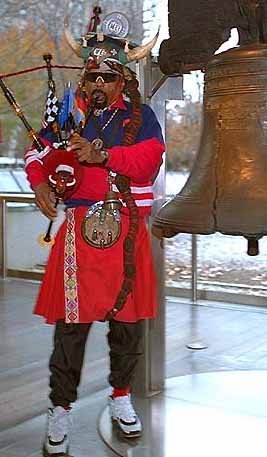
Rufus Harley • The Pied Piper Of Jazz


Si se pensaba que la gaita es un instrumento totalmente ajeno al jazz ... error ...
Rufus Harley es un multinstrumentista de vientos, que ha tocado con Herbie Mann, Sonny Stitt, Sonny Rollins, John Coltrane, Dizzy Gillespie y Dexter Gordon, adoptó en muchas de sus interpretaciones la gaita como instrumento principal, idea que le surgió luego de escuchar la banda militar de gaiteros en los funerales de Kennedy.
Bio en ingles: http://en.wikipedia.org/wiki/Rufus_Harley

  ///////
 
Rufus Harley is a multi instrumentalist of winds, that has played with Herbie Mann, Sonny Stitt, Sonny Rollins, John Coltrane, Dizzy Gillespie and Dexter Gordon, adopted in many of its interpretations the harmonica as main instrument, idea that arose to him after hearing the Military band of bagpipers at Kennedy funerals.
Bio: http://en.wikipedia.org/wiki/Rufus_Harley


with / junto a Sonny Rollins


Saturday, August 22, 2026

Sonny Stitt • 12 !


Review:
by Scott Yanow
Sonny Stitt was in prime form in the early '70s when he recorded two classics: Tune Up and Constellation. 12! from a year later tends to get overlooked but this album is also one of the saxophonist's most rewarding recordings. Assisted by pianist Barry Harris, bassist Sam Jones and drummer Louis Hayes, Stitt (switching between alto and tenor) is in superb form on five standards and two blues; highlights include "I Got It Bad," "Every Tub" and "Our Delight."

///////

Reseña:
por Scott Yanow
Sonny Stitt estaba en plena forma a principios de los 70 cuando grabó dos clásicos: Tune Up y Constellation. 12! de un año más tarde tiende a ser pasado por alto pero este álbum es también una de las grabaciones más gratificantes del saxofonista. Asistido por el pianista Barry Harris, el bajista Sam Jones y el baterista Louis Hayes, Stitt (cambiando entre alto y tenor) está en excelente forma en cinco estándares y dos blues; los puntos destacados incluyen "I Got It Bad", "Every Tub" y "Our Delight".


Friday, August 7, 2026

Sonny Stitt • Black Vibrations


Sonny Stitt
Hijo de un profesor de música y hermano de un concertista de piano, el saxofonista tenor, Sonny Stitt (Boston, 1924), empezó a estudiar piano para después pasarse al clarinete y al contralto. Afincado en Saginaw, empezó a trabajar con Thad Jones, hasta que se trasladó con su familia a Detroit donde contacto con Mel Lewis y Lucky Thompson. En la ciudad de Newark, obtuvo algunos contratos intrascendentes y en aquélla época empezó a escuchar a Charlie Parker cuando el saxo alto de Kansas, trabajaba en la orquesta de Jay McShann.


Poco después conoció personalmente a "Bird" en Kansas City, donde ambos se juntaron para tocar en una sesión privada en la que Parker pudo comprobar lo que se decía de Sonny Stitt, (Miles Davis confirmó que Stitt tocaba como Parker, incluso antes de que este conociera al genio de Kansas). Entre 1945 y 1946 y en New York, tocó con Dizzy Gillespie, grabando varios temas para el sello "Musicraft" y tambien con el pianista, Bud Powell. A su vuelta a Detroit, tuvo que interrumpir su actividad a consecuencia de su adicción a la droga. Afortunadamente siguió un severo proceso de desintoxicación en Lexington y en 1949, ya estaba de vuelta a New York. Adoptó el saxo tenor en esta segunda etapa -probablemente tras comprobar que Parker era el rey indiscutible del saxo alto- y formó un pequeño grupo que codirigió con Gene Ammons, durante un par de años. 1949 fue tambien el año de su debut discográfico con el tema: "All God's Chillun Got Rhythm" (Prestige) un sello con el que grabó durante dos años (1949-1950) una serie de espléndidos discos.
A finales de los años cincuenta, fue contratado por el productor Norman Granz, para su famoso espectáculo "Jazz at the Philharmonic" con el que recorrió varios países europeos. En 1964 realizó otra importante gira, esta vez a Japón con un gran sexteto que incluía entre otros grandes músicos, a Jay Jay Johnson y Clark Terry. De vuelta a los Estados Unidos, formó un quinteto con Zoot Sims, de duración efímera. En 1971 fue llamado por George Wein para formar junto a Dizzy Gillespie, Kai Winding, Thelonious Monk, Al McKibbon y Art Blakey el sexteto "The Giants of Jazz" con el que realizó una larguísima y extensa gira por Nueva Zelanda, Australia, Japón, Israel y Europa con un resultado de critica y publico extraordinario. En 1974 participó en el Festival de Newport dentro del espectáculo "The Musical Life of Charlie Parker".
Claramente influenciado por Charlie Parker, la discografía de Sonny Stitt es abundantísima -grabó sólo a su nombre cerca de ciento cincuenta álbumes.
Su muerte en 1982 dejó un vacío importante entre los saxofonistas importantes del jazz.

///////

Artist Biography by Bob Porter
Charlie Parker has had many admirers and his influence can be detected in numerous styles, but few have been as avid a disciple as Sonny Stitt. There was almost note-for-note imitation in several early Stitt solos, and the closeness remained until Stitt began de-emphasizing the alto in favor of the tenor, on which he artfully combined the influences of Parker and Lester Young. Stitt gradually developed his own sound and style, though he was never far from Parker on any alto solo. A wonderful blues and ballad player whose approach influenced John Coltrane, Stitt could rip through an up-tempo bebop stanza, then turn around and play a shivering, captivating ballad. He was an alto saxophonist in Tiny Bradshaw's band during the early '40s, then joined Billy Eckstine's seminal big band in 1945, playing alongside other emerging bebop stars like Gene Ammons and Dexter Gordon. Stitt later played in Dizzy Gillespie's big band and sextet. He began on tenor and baritone in 1949, and at times was in a two-tenor unit with Ammons. He recorded with Bud Powell and J.J. Johnson for Prestige in 1949, then did several albums on Prestige, Argo, and Verve in the '50s and '60s. Stitt led many combos in the '50s, and re-joined Gillespie for a short period in the late '50s. After a brief stint with Miles Davis in 1960, he reunited with Ammons and for a while was in a three-tenor lineup with James Moody. During the '60s, Stitt also recorded for Atlantic, cutting the transcendent Stitt Plays Bird, which finally addressed the Parker question in epic fashion. He continued heading bands, though he joined the Giants of Jazz in the early '70s. This group included Gillespie, Art Blakey, Kai Winding, Thelonious Monk, and Al McKibbon. Stitt did more sessions in the '70s for Cobblestone, Muse, and others, among them another definitive date, Tune Up. He continued playing and recording in the early '80s, recording for Muse, Sonet, and Who's Who in Jazz. He suffered a heart attack and died in 1982.


Monday, July 27, 2026

Tuesday, July 21, 2026

Sonny Stitt & Bennie Green • My Main Man


Friday, July 3, 2026

Sonny Stitt • Made For Each Other


Nice soul jazz and blues small group date from the late '60s. Stitt was backed by organist Don Patterson and drummer Billy Higgins, and had room to soar, explore themes fully, and play with expressive force and energy.
Ron Wynn

///////

Un bonito grupo de jazz y blues soul que data de finales de los 60. Stitt estaba respaldado por el organista Don Patterson y el baterista Billy Higgins, y tenía espacio para elevarse, explorar los temas por completo y tocar con fuerza y energía expresiva.
Ron Wynn


www.sonnystitt.com ...
  

Sunday, May 31, 2026

VA • The Greatest Soul Jazz


Ray Charles, Cannonball Adderley, Sonny Stitt, Gene Ammons, Roy Ayers, Donald Byrd, Stanley Turrentine, Horace Silver, Grant Green, Hank Mobley, George Benson, Jimmy Smith, Kenny Burrell, Jimmy McGriff, Ray Bryant, Lee Morgan.